Why Costa Rica for Permaculture Design?
Costa Rica ranks among the world's most biodiverse nations. Despite covering just 0.03% of the Earth's surface, it contains 5% of the world's species. This biodiversity isn't accidental; it's the result of geography, climate, and Costa Rica's relatively recent commitment to conservation (30% of the country is now protected land).
For learning permaculture, this matters. Permaculture is fundamentally about working with nature — understanding natural patterns and designing human systems to align with them. In a place like Costa Rica, where nature's complexity is visible everywhere, the lessons are immediate and visceral. You don't just read about biodiversity; you see it, hear it, and feel its presence every moment you're there.
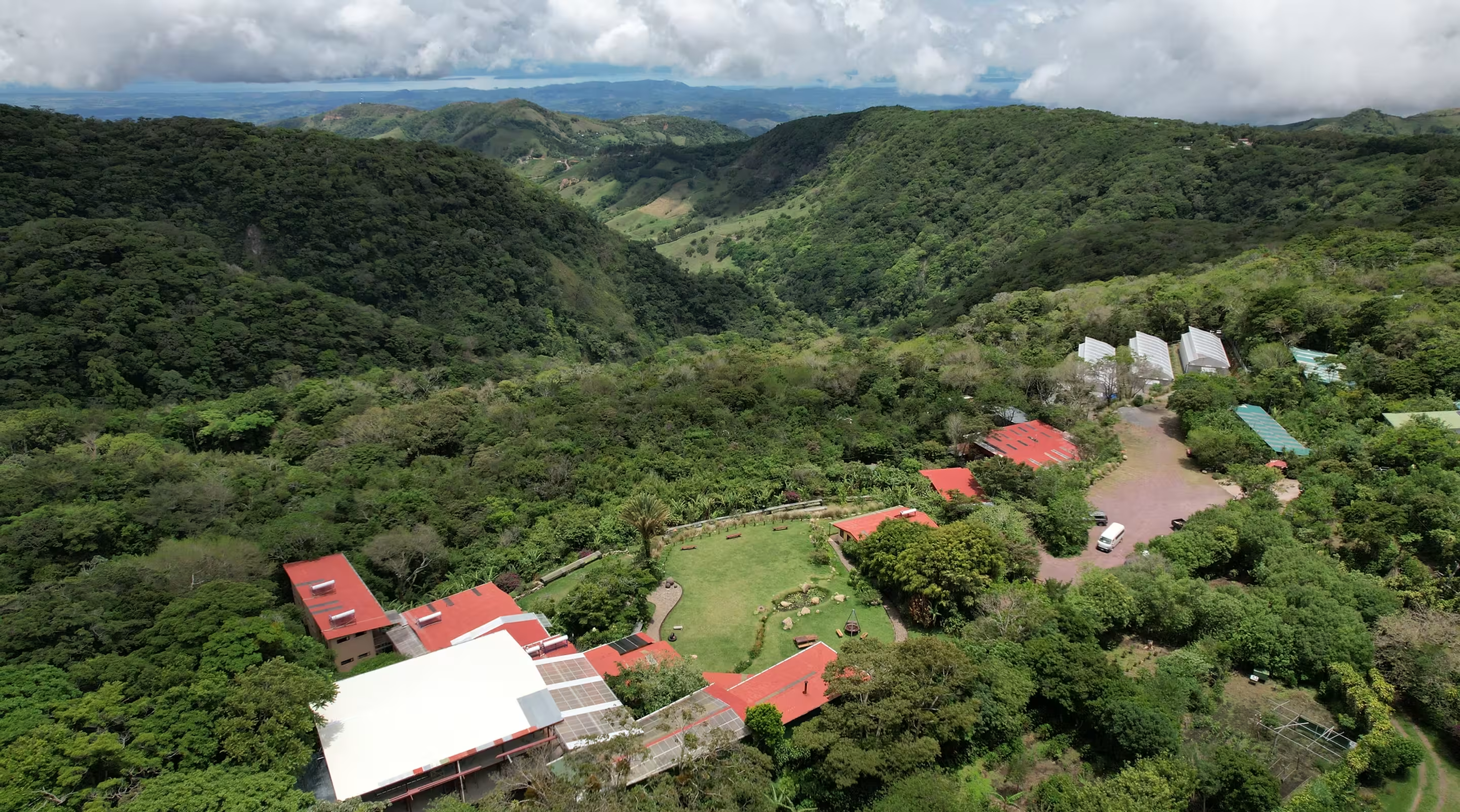
More specifically, the Monteverde region of Costa Rica — where Valle Escondido is located — offers something rare: a cloud forest ecosystem at high altitude, one of the planet's most complex and least understood environments.
Monteverde: Cloud Forest at 1,400 Meters
Monteverde sits at about 1,400 meters elevation (4,600 feet) on the Continental Divide. This creates a unique microclimate. Moisture-laden winds from the Caribbean collide with the mountain, forcing air upward and cooling it. The result: clouds that rarely lift, even when the sun is shining. Rain is constant — sometimes as mist, sometimes as downpours. The vegetation is draped in moss and bromeliads.
This environment is challenging. Construction must account for constant moisture. Agriculture must adapt to cool, wet conditions. Water management is about shedding excess water, not storing it. But it's also extraordinarily rewarding. The biodiversity is staggering. The same square kilometer of cloud forest can contain more bird species than entire countries.
For a permaculture student, learning to design in this environment means understanding:
- How to work with water abundance rather than scarcity
- How to use vertical space and layering (typical in tropical forests)
- How to encourage biodiversity in a naturally diverse system
- How to build and maintain structures in high-moisture conditions
- How to produce food in cool, wet conditions
These skills are transferable. If you can design a productive food system in Monteverde's cloud forest, you can design one almost anywhere.
Valle Escondido: The Living Demonstration
Valle Escondido is not a permaculture school with a demonstration garden. It is a functioning 17-hectare permaculture system that includes a hotel, a restaurant, a regenerative farm, a private nature reserve, and ongoing community education. Every system you see is designed using the principles you're learning. Every day of the course, you're living inside the example.
The Land and Its History
The property was degraded when Jonah, the founder, purchased it. Cleared forest, compacted soil, no water sources beyond rain. The transformation took years, but it's now one of the most complete permaculture implementations in the tropics.
At 1,400 meters elevation on Monteverde's Continental Divide, the 17 hectares encompass primary forest (protected as a private nature reserve) and managed zones for agriculture, buildings, and recreation. The mix is intentional: protecting the forest while demonstrating that humans can live well in the region without destroying it.
The Hotel and Accommodation
Most PDC courses happen in spartan conditions. Valle Escondido is different. Participants stay in comfortable rooms with hot water, good beds, and private bathrooms. This isn't luxury, but it's far more comfortable than many permaculture courses. Why? Because the design principle is People Care — students can't learn effectively if they're miserable or sick.
The hotel rooms themselves are designed with permaculture in mind: natural ventilation, passive heating, water conservation, and materials that complement rather than damage the environment. It's a practical demonstration of how to integrate human comfort with ecological design.
Food and the Restaurant
Breakfast, lunch, and dinner are prepared on-site, with approximately 30% of ingredients coming from the on-site regenerative farm. The restaurant isn't separate from the permaculture system; it's at the heart of it. Kitchen waste becomes compost or bokashi. Greywater irrigates gardens. The relationship between land and table is transparent.
Students eat the food produced by the farm they're studying. This creates a powerful learning feedback loop: you see the plant, see it harvested, see it prepared, eat it, and understand the complete cycle. That integration is rare in agriculture education.
Water Systems
Valle Escondido receives enormous rainfall — over 2,500mm (100 inches) annually. Rather than being a liability, this is managed as a resource. Rooftop water is captured and diverted into clay-lined ponds distributed across the property. These ponds:
- Provide gravity-fed water for irrigation (eliminating the need for pumps)
- Store water for dry periods
- Support fish production (tilapia thrive in these systems)
- Create habitat for amphibians, dragonflies, and water-dependent insects
- Cool the surrounding microclimate through evaporation
Excess water is diverted into swales and infiltration systems that recharge groundwater. The result: despite enormous rainfall, water is not wasted. The land is hydrated continuously throughout the year, even in the "dry" season.
Soil and Regeneration
When Jonah arrived, the soil was compacted and depleted. Over a decade, it's been rebuilt through continuous addition of biochar, compost, vermicompost, and bokashi. The soil is now dark, rich, and teeming with life. Earthworms are abundant. Mycorrhizal networks are established. Plant productivity has increased dramatically.
The regeneration is visible. The land gets greener every year. Water infiltration improves. Biodiversity increases. This is not a static demonstration; it's an ongoing regeneration project that students can observe and contribute to.
Food Forest and Agroforestry
The food forest at Valle Escondido is a vertical layering of plants: canopy fruit trees (mango, avocado, citrus), nitrogen-fixing midstory trees, understory shrubs with edible berries, ground cover with edible herbs, and root crops. This stacking produces surprising yields from relatively small areas.
Within the forest are perennial vegetable plants, fruiting shrubs, medicinal herbs, and plants for building materials, dyes, and animal feed. Every layer serves multiple functions. A single fruit tree provides food, shade, windbreak, nitrogen fixation (if legume), habitat for beneficial insects, and beauty.
The Reserve and Biodiversity
The 17 hectares of protected nature reserve at Valle Escondido is part of Costa Rica's private reserve system. It's not a park for human recreation; it's a genuine nature reserve where human presence is minimized and forest processes continue largely unimpeded. However, strategic observation points allow students to observe the forest at various elevations and edge zones.
The biodiversity is extraordinary. Bird watching alone can produce 30+ species in a morning. At night, the soundscape is dominated by frog calls — over 50 frog species inhabit the area. The insect diversity is virtually impossible to quantify. And hidden in the canopy are jaguars, ocelots, quetzals, and hundreds of other species that make the cloud forest one of the planet's biological treasures.
For permaculture students, the reserve is a constant reminder of what the land wants to become. It's the "wild" version of the landscape they're learning to design. Understanding the relationship between protected forest and designed agroforestry is critical to understanding permaculture.
The Permaculture Design Certificate at Valle Escondido
The Structure
The PDC at Valle Escondido follows the standard 72-hour curriculum developed by Bill Mollison and David Holmgren, spread over 16 days:
- Days 1-2: Permaculture ethics and principles. Observation and analysis of the Valle Escondido system.
- Days 3-5: Climate, water, and land. Understanding weather patterns, water cycling, and how to design for local conditions.
- Days 6-8: Soil and food production. Soil building, plants, animal integration, and food forest design.
- Days 9-11: Community design and governance. How permaculture applies to social systems, not just land.
- Days 12-16: Design project. Students work in teams to develop a complete permaculture site design for a real client in the Monteverde community.
Throughout the course, field work is integrated. Students aren't just sitting in classrooms; they're observing swales, working with soil, pruning trees, observing water systems, and practicing on the actual landscape.
The Instructors
The instructors are not academics. They're practitioners with 10-20+ years of hands-on experience in permaculture design, tropical agroforestry, regenerative agriculture, and community development. Most are Costa Rican or have lived in Costa Rica for decades.
José Pablo Fernández, one of the lead instructors, is trained in direct lineage from Bill Mollison. He's a co-founder of Guardianes del Bosque, stewarding 400+ hectares of ecological restoration. Vero Flores teaches regenerative agriculture from the lived experience of Comunidad Hierba Buena, a community of families practicing collective regenerative living. Roy Cruz, Monteverde native and director of Valle Escondido's permaculture systems, brings intimate knowledge of local conditions and a 12-year history of developing Valle Escondido into what it is today.
The combination is powerful: international permaculture credentials combined with decades of tropical design experience.
The Design Project
The capstone of the course is a complete permaculture site design. Rather than designing a hypothetical property, students design for a real client — a member of the Monteverde community who genuinely wants permaculture design applied to their land. The client provides their property details, their goals, and their constraints. Students observe the site, interview the client, and develop a complete design: map, swale layout, water systems, food production zones, buildings, and community elements.
This isn't a simulation. The design is real. It's presented to the client. Many of these designs have been implemented, creating actual permaculture projects in the Monteverde region.
Who Attends?
The maximum is 25 participants. They come from diverse backgrounds: architects, engineers, agricultural professionals, tourism industry workers, environmental educators, career changers, and people simply seeking a more sustainable life. Past cohorts have included participants from the USA, Mexico, Europe, Costa Rica, and Latin America.
No prior knowledge of permaculture is required. Beginners and experienced professionals learn side-by-side. The design project ensures that even experienced participants are challenged to think systematically and creatively.
Why Learn in Costa Rica Specifically?
Biodiversity as a Teacher
Costa Rica's biodiversity is not just scenery; it's a teaching tool. Observing how hundreds of plant and animal species coexist in a small area teaches you about functional relationships. Why does a particular plant grow only in certain microclimates? How do fruiting times align with animal migration? What pollinates this flower? These aren't abstract questions in Costa Rica; you can go outside and observe the answers.
Cultural Alignment with Permaculture
Costa Rica has a strong conservation culture. "Pura Vida" (pure life) is both a greeting and a philosophy emphasizing harmony with nature. Indigenous knowledge about tropical agroforestry is still present in the country. The cultural context supports permaculture thinking in ways that some countries don't.
Tropical Systems
Tropical permaculture is different from temperate permaculture. Year-round growing seasons mean different design strategies. Extreme biodiversity requires different approaches to pest management. Tropical soils have unique challenges and opportunities. If you learn in the tropics, you understand permaculture in a different, more nuanced way.
The Global Network
Costa Rica has become a hub for permaculture education in Latin America. There's a network of practitioners, designers, and schools across the region. Participating in the Valle Escondido course connects you to this network — people working on regenerative agriculture, community development, and ecological restoration throughout Central America and beyond.
Practical Information About the Course
When?
AVER's PDC at Valle Escondido runs once annually. Check the current schedule and dates at the contact page or join the waitlist to be notified when applications open. The program typically falls at the beginning of Monteverde's rainy season — when the reserve is most vibrant and water systems are most active.
Cost and What's Included
Early Bird pricing: $1,800 USD (until April 5). Regular pricing: $2,000 USD. This includes:
- 16 nights accommodation
- 48 meals (breakfast, lunch, dinner)
- Full access to Valle Escondido and the nature reserve
- All course materials
- Field work and community site visits
- The design project
- Internationally recognized PDC Certificate
- Access to the AVER practitioner network
Not included: international and domestic flights, travel insurance, transportation to/from Monteverde, personal expenses, optional night nature tours (available at additional cost).
How to Apply
Applications are submitted online. The application includes basic information, your background, and your goals for the course. Applications are reviewed, and participants are confirmed by email. A $900 USD deposit secures your spot. The remaining balance is payable in 2 installments, with full payment due by April 21.
Questions?
Schedule a free 30-minute call with one of the instructors. It's a genuine conversation — not a sales pitch. You can ask anything about the curriculum, Valle Escondido, your specific situation, or what a typical day looks like.
Why Valle Escondido Stands Out
There are permaculture schools around the world. Many are good. Some are excellent. Valle Escondido stands out for several reasons:
Living System: Most permaculture courses teach in a demonstration garden. Valle Escondido is a functioning, operational property where humans live and work. The design isn't perfect (no design ever is), but it's real and ongoing.
Integrated Hospitality: The course is taught at a hotel and farm. Accommodation, food, and education are all integrated. This isn't incidental; it's central to the pedagogy. You understand how humans live well at Valle Escondido because you're living that way for 16 days.
Tropical Location: Learning permaculture in the tropics — specifically in a high-altitude nature reserve bordering the Monteverde cloud forest — teaches you to design differently than learning in a temperate climate. You understand biodiversity, abundance, and seasonal patterns that are unique to tropical regions.
Real Design Project: Many courses have students design hypothetical projects. Here, you design a real site for a real client. The design might be implemented. You might return years later to see the results. That's powerful motivation and accountability.
Instructor Quality: The teaching team combines international permaculture credentials with decades of tropical design experience. You're learning from people who've actually built what they're teaching.
Small Group: 25 participants maximum. This allows genuine mentorship and individual feedback. It also creates a cohort experience — you're building relationships with people who share your commitment to sustainable design and will become part of your professional network.
What Comes After the Certificate?
The PDC is not a degree that guarantees employment. It's a credential that demonstrates you've completed a rigorous, comprehensive course in permaculture design. What comes next depends on your goals:
- Professional Designer: Some graduates become permaculture consultants, selling design services to land owners and organizations.
- Farm Manager: Others take roles managing regenerative farms and food forests.
- Educator: Many teach permaculture to community members, students, or other farmers.
- Land Owner: Some apply the principles to their own property, creating permaculture systems for personal sustenance.
- Community Organizer: Others use permaculture as a framework for community development and ecological restoration projects.
What's consistent is that PDC graduates understand permaculture deeply. They've lived in a permaculture system. They've designed using the principles. They've earned a globally recognized credential. And they're part of a worldwide network of permaculture practitioners working toward ecological regeneration and human flourishing.
The Bottom Line
If you're genuinely interested in permaculture — not just curious about it, but committed to understanding how to design sustainable human systems — AVER's Permaculture Design Certificate at Valle Escondido is one of the world's best programs for learning applied permaculture. The combination of location, system, instructors, and pedagogy is rare. The 16 days you spend there will change how you see land, agriculture, design, and human potential.
Costa Rica's Valle Escondido is not just a place to take a course. It's a working model of what's possible. It's a demonstration that humans can live well, productively, and regeneratively on land. And that demonstration is the most powerful teacher of all.