What Does "Homesteading" Actually Mean in 2026?
Modern homesteading is a property-based lifestyle built around producing a significant portion of your own food, energy, and basic necessities. It's not about rejecting technology wholesale or attempting some romantic return to 1890s subsistence living. Rather, it's about selectively using modern knowledge and tools while reducing dependence on centralized systems that require constant financial input and offer little resilience.
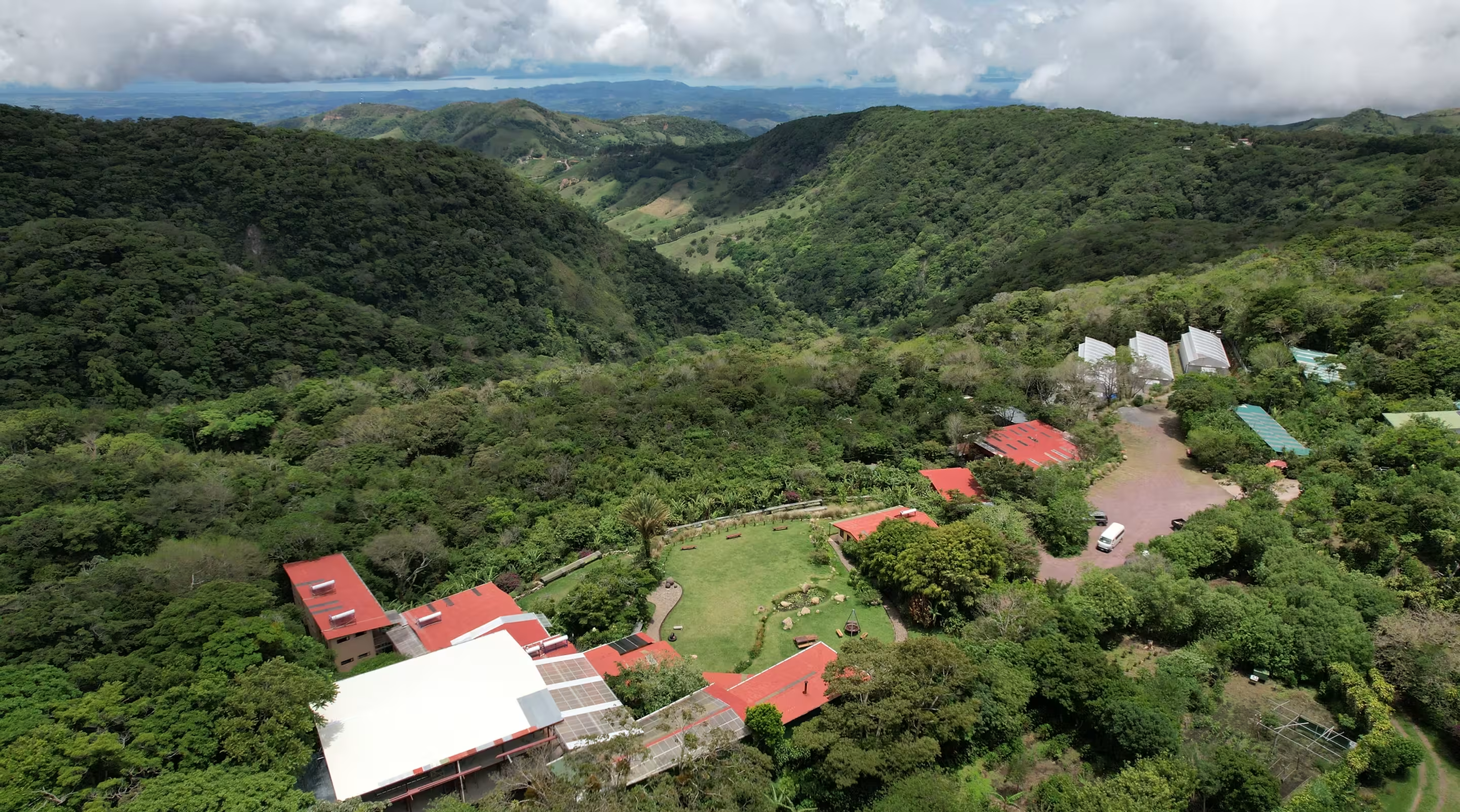
A homestead can take many forms. It might be a quarter-acre urban lot with chickens, fruit trees, and intensive raised bed gardens. It might be five acres of countryside with pasture, a barn, and diverse food production. Or it might be 17 hectares of nature reserve and farm like Valle Escondido—each scale and context presents different opportunities and challenges. The common thread isn't size; it's intention. A homestead is founded on the decision to participate in your own sustenance rather than outsourcing it entirely.
This distinction matters because it shifts your relationship to the land. A homestead is not a weekend project or hobby farm—it requires ongoing attention, learning, and engagement. But it's also not a full-time subsistence struggle. The goal of a well-designed homestead is to produce abundance efficiently, reducing work over time as perennial systems mature and biological processes replace manual labor.
Why People Fail in the First Year
The learning curve for homesteading is steep. Growing food, raising animals, managing water, preserving harvests, understanding soil—each of these is a distinct skill requiring years of experimentation and learning. Most people underestimate how much there is to learn and become overwhelmed when the first season doesn't go as planned. Crops fail. Animals get sick. Water runs out during the dry season. The dream collides with reality.
Another common mistake is investing in infrastructure before understanding how the land actually works. People build expensive structures—barns, greenhouses, elaborate water systems—based on what they imagine they'll need, rather than what their land and climate actually require. This approach wastes money and often creates systems that don't match the land's reality. Water infrastructure built without understanding seasonal patterns fails. Buildings sited without attention to wind, sun, and microclimate become uncomfortable and expensive to maintain.
Water is perhaps the most commonly neglected resource until crisis forces attention. A homestead without reliable water can't grow food during dry seasons. Animals suffer. The whole system becomes fragile. Yet water management is often left to chance, assumed to be "solved" by well water or municipal supply, until it unexpectedly fails. Understanding and designing for water—the most fundamental of all resources—should be among the first priorities.
Going it alone compounds every mistake. Successful homesteaders are embedded in community networks—relationships with neighbors who understand local conditions, community gardening groups that share knowledge, mentors who've already made the mistakes you're about to make. Isolation not only increases the learning curve; it increases the risk of burnout. Homesteading is deeply rewarding but also demanding; community makes the difference between a sustainable practice and a source of exhaustion.
Finally, perfectionism kills more homesteads than any single factor. A rough, functional water system that delivers water beats a theoretically perfect system that never gets built. Imperfect compost piles that actually produce fertility beat no composting system. A garden that produces some vegetables imperfectly beats no garden. Starting small with systems that actually work, then improving over time, is the only reliable path forward.
Choosing the Right Land
Water access and reliability are more important than anything else. Understanding your water situation—whether springs are reliable year-round, whether wells produce consistently, whether there's seasonal surface water—is critical before falling in love with a property. Spend time on the land during the dry season. If it's genuinely dry, you need to know this. Walk the property after heavy rain to see how water moves. Interview neighbors about their water experience. A beautiful property with uncertain water is a liability.
Climate and growing season determine what you can grow and how much work is required. Tropical and subtropical climates produce food year-round, dramatically reducing the complexity of food storage and preservation. Temperate climates with distinct seasons require building resilience through preservation and storage—a much more elaborate system. Neither is "better," but the climate you choose shapes every other decision.
Soil quality and history matter, but degraded soils are not deal-breakers. Poor soils represent years of work, not impossibility. Before you buy, understand the history: was it farmed conventionally? Grazed heavily? Is it eroding, compacted, or nutrient-depleted? Each condition has solutions, but solutions require time. If you're buying land that hasn't been managed well, budget at least three to five years of intensive soil building before expecting productive yields.
Existing trees and perennials have enormous value. Mature fruit trees are 5-10 years of development already accomplished. Established forest provides immediate habitat, erosion control, and microclimate benefits. A property with existing perennials is worth a significant premium over bare land because you're starting years ahead in the development of productive systems.
Legal and regulatory context shapes what you're actually allowed to do. Understand zoning regulations before buying. Can you raise animals? How many? Can you build additional structures? Are there water rights attached to the property, or is water controlled by others? Can you subdivide or build small structures for rental? What building permits are required? These practical details transform an ideal dream into either achievable reality or costly frustration.
Your First Year: What to Actually Prioritize
Months 1-3: Observe and Design
Spend the first quarter-year walking the land in different weather conditions. Where does water flow and accumulate? Which areas are consistently moist? Which slope faces the morning sun and which faces afternoon heat? Where is the microclimate most protected? Observe during rain, during dry periods, during wind. Notice which native plants thrive in which areas—they'll teach you about what your land wants to grow.
Map the basic contours of your property. You don't need expensive surveying equipment; a simple bunyip level reveals enough to understand where water flows and where structures make sense. Talk to neighbors about local climate patterns, pests, flooding history, and soil conditions. Sketch a simple site design before committing to anything permanent. This observation phase is the most valuable work you can do in those early months.
Months 3-6: Water and Soil First
Install your first water-harvesting earthwork. This might be a single on-contour swale, a small pond, or rooftop gutters and tanks—whatever makes sense for your situation. Water comes first because it enables everything else. Simultaneously, start composting every bit of organic material from your land. Kitchen waste, grass clippings, fallen leaves, animal manures—all become fertility rather than waste.
Begin with a single manageable garden bed. Don't aim for the garden that will feed your family; aim for a garden that you'll actually manage and learn from. Even a 20-square-meter bed, well-maintained and observed closely, teaches more than a neglected half-acre.
Plant nitrogen-fixing pioneer species across bare areas. These fast-growing plants (legumes, acacias, pigeon pea) capture nitrogen from the air, stabilize soil, and prepare the ground for future productive systems. They're the starting note in a long-term composition.
Months 6-12: Systems and Structure
If you're ready, add small animals. Chickens or ducks are the easiest entry point: they're lower cost, lower complexity, and highest return. A small flock (3-6 birds) provides eggs, pest control, compost material, and behavioral observation opportunities without overwhelming a beginner. Expand your garden based on what actually worked in the first season—not on what you hoped would work, but on what did work in your specific climate and soil.
Build food storage capacity. A root cellar or cool storage space extends the harvest season. Learn basic preservation—fermentation, drying, and vinegar preservation are accessible to anyone. These skills transform surplus into security.
Plant perennials: fruit trees, berry bushes, medicinal herbs, nitrogen-fixing trees. These take years to produce, so starting them immediately is essential. Every year you delay is a year of lost future production.
Growing Food Without Experience: Where to Actually Start
Start with three to five crops you actually want to eat that are proven in your climate. Learn those deeply before adding more. Success with a few crops builds confidence and knowledge; failure with many demoralizes and teaches nothing. At Valle Escondido in the tropical zone, sweet potatoes, cassava, plantains, and beans are exceptionally forgiving and provide real caloric production. In temperate climates, garlic, potatoes, squash, and leafy greens offer similar resilience and return.
The most important principle is iteration. Grow something, observe what happens closely, adjust your approach based on what you learned, and grow it again. This feedback loop is more valuable than any textbook. Notice which plants thrive when, which ones fail, what the soil looks like after harvest, how pests behave in your specific microclimate. This direct observation, repeated season after season, is how you develop real knowledge.
How Permaculture Changes the Homesteading Equation
Conventional homesteading often treats each element—the garden, the animals, the water system, the energy production—as separate systems to solve independently. Permaculture changes this fundamentally by treating the whole property as one designed system where elements support each other. This integrated approach reduces work, increases resilience, and dramatically speeds the journey toward self-sufficiency.
Consider: chickens in a mobile chicken tractor (a bottomless coop moved daily across garden beds) simultaneously fertilize soil with their manure while scratching for pests and eating weeds. Ducks kept near a pond feed on aquatic plants and insects while their waste enriches the water, which then irrigates gardens. Fish in ponds feed on vegetation and produce nutrient-rich waste; that water, used to irrigate gardens, contains fertility that plants use, kitchen waste returns to compost, and eventually to soil. Waste becomes input. The system is more resilient, more productive, and requires less external input than the sum of isolated parts.
"Stacking functions"—where each element serves multiple purposes—is the central insight. A food forest produces fruit, creates microclimate, improves soil, supports pollinators, and provides mulch for the garden. A pond stores water, supports aquaculture, improves fire resilience, and becomes ecosystem. Swales slow water, spread infiltration, establish planting berms, and create zones of consistent moisture for trees. Understanding how to arrange elements so they enhance each other is the practical genius of permaculture design.
What a Day at Valle Escondido Looks Like
A morning might involve harvesting fruit and vegetables from the food forest, feeding tilapia in the clay-lined ponds, checking the Mariola bee hives (stingless bees endemic to Central America), collecting eggs from the small chicken flock, and processing compost from the day's kitchen waste. Afternoon work might include maintaining the greywater constructed wetland, working in the nursery propagating native trees, or clearing and terracing a new area for planting.
The rhythms are real work, undeniably. But what strikes visitors is what they don't see: exhaustion, drudgery, or the isolated struggle that skeptics predict. Instead, the work is purposeful, varied, deeply connected to living systems, and usually shared with other people. There's real satisfaction in feeding tilapia you'll eat, tending bees that pollinate your garden, harvesting food you propagated and planted.
If you're serious about accelerating this learning process, the Permaculture Design Certificate at Valle Escondido brings together intensive theoretical learning with hands-on experience in real, functioning systems. Students work in these exact systems—ponds, food forests, water harvesting, soil building—while designing their own projects with instructor feedback. It's the fastest path to moving from theory to competent practice. Reach out through the contact page if you're considering it.
The Fastest Path to Self-Sufficiency
Self-sufficiency is a direction, not a destination. Perfectly self-sufficient humans exist nowhere; every homestead has inputs and trade connections. But the direction toward greater self-reliance—more food grown locally, more water captured on-site, more energy harnessed from sun and wind, more fertility cycled internally—is achievable and profoundly rewarding.
The fastest path starts soonest. Every year you begin is a year gained toward long-term productivity. Start with water management—it enables everything else. Build your soil through composting and observation. Grow a few things deeply and learn from them. Add animals when you're ready, starting small. Plant perennials from day one, understanding that the fruits of that investment will arrive years later. Find and build community with others doing similar work.
This is the permaculture path—not ideology, but pragmatism grounded in ecological principles. Work with natural patterns rather than against them. Build systems where inputs and outputs cycle internally. Observe carefully and adjust. Start small and scale carefully. And move at a pace that's sustainable for yourself and the land. This is how homesteads become genuinely productive, genuinely resilient, and genuinely rewarding.